Several research infrastructures included in Estonia’s National Research Infrastructures Roadmap maintain close cooperation with international research infrastructures. The Estonian Research Council supports participation in and collaboration with internationally funded research infrastructures and organisations, thereby strengthening the integration of Estonian research into the European and global research landscape.
Estonia's Participation in International Research Infrastructures

The European Space Agency (ESA) is an international organization whose mission is to shape Europe’s space capabilities and ensure that investments in space bring benefits to European citizens and the world as a whole. ESA is active across all areas of the peaceful use of space, including space science missions, Earth observation, satellite navigation, telecommunications, human spaceflight, launch vehicles, technology development, and more.
ESA works closely with the European Union to develop and operate the Galileo global navigation satellite system and the Copernicus Earth observation programme.
Estonia became an ESA Member State in 2015. Estonia is represented in ESA by the Ministry of Economic Affairs and Communications. The primary national contact point for ESA-related activities is the Estonian Space Office, operating under Enterprise Estonia and KredEx.
Examples of Estonia’s involvement in ESA activities:
- The OPIC optical telescope, developed at the University of Tartu, is part of the Comet Interceptor mission.
- Researchers at the Tartu Observatory participate in the ARIEL mission science consortium.
- Scientists at NICPB (National Institute of Chemical Physics and Biophysics) are involved in the LISA mission science consortium.
- ESA co-funded doctoral researchers are conducting projects at Estonian universities, including:
- At Tallinn University of Technology: Utilising Pyrite (FeS₂) in Monolithic Technology Solar Cell Manufacturing from Lunar Regolith.
- At the University of Tartu: Application of Machine Learning in Autonomous Space Flyby Missions.
- The Estonian office of ESA’s education project, ESERO Estonia, is located in Tartu.
- ESA BIC Estonia operates in both Tartu and Tallinn.
- The Estonian Land Board hosts ESTHub, the national satellite data centre that collects data from three ESA satellites.
Explore ESA’s research and internship programmes.
Current ESA vacancies are available through the ESA Careers Portal, while smaller research opportunities, including co-funded doctoral projects, can be found on the ESA Open Space Innovation Platform (OSIP).
Everyone can also participate in ESA public procurements and tenders. To view currently open opportunities, sort by Open Date (Z-A).
Follow ESA’s science missions and activities and get involved if you have the skills, interest, and motivation to contribute.
Contact at ETAG:
| Sigrid Soomer | Research Infrastructure Senior Coordinator | +372 5557 4443 | sigrid.soomer@etag.ee |
 The European Organization for Nuclear Research (CERN) is an international organization whose mission is to provide scientists with the technical infrastructure required to explore the fundamental structure of the Universe. CERN’s laboratory is located on the French-Swiss border near Geneva and comprises a range of particle accelerators and experiments, including the Large Hadron Collider (LHC), the world’s largest and most powerful particle accelerator. CERN is also involved in all activities necessary for maintaining and advancing such a large-scale research infrastructure, including applied physics and materials science research, technology development, engineering and construction, information technology, and other supporting activities.
Estonia became a full Member State of CERN in 2024. Estonia is represented at CERN by the Ministry of Economic Affairs and Communications.
Examples of Estonia’s involvement in CERN activities:
- The National Institute of Chemical Physics and Biophysics (NICPB/KBFI) participates in the CMS experiment and hosts a Tier-2 computing centre for the CMS detector.
- The University of Tartu participates in the Crystal Clear Collaboration, CLIC, CLOUD, and COMPASS collaborations.
- Tallinn University of Technology (TalTech) participates in the I.FAST project and the CMS-BRIL experiment.
- Research institutions including NICPB (KBFI), the University of Tartu, and TalTech, together with companies such as NPM Silmet, Testonica, and GScan, have signed cooperation agreements with the next-generation particle accelerator project, the Future Circular Collider (FCC).
Collaboration opportunities are available in many different fields and disciplines and are open to people with a wide range of educational and professional backgrounds.
All current CERN job openings, internship opportunities from bachelor’s level onward, doctoral positions, and calls for secondment and fellowship programmes can be found on the CERN Careers Portal. New opportunities are added continuously, so be sure to check regularly!
Contact at ETAG:
| Sigrid Soomer | Research Infrastructure Senior Coordinator | +372 5557 4443 | sigrid.soomer@etag.ee |

The European Molecular Biology Laboratory (EMBL) is an intergovernmental research organization and Europe’s flagship institution for the life sciences, operating under a convention established in 1974. EMBL currently has 29 member states, and Estonia became a full member in 2023.
EMBL covers a broad spectrum of molecular biology research across six sites. Its headquarters are located in Heidelberg, Germany, with additional outstations at:
- EMBL Barcelona (Spain), focusing on tissue biology and disease modelling;
- EMBL Hamburg (Germany), specializing in structural biology;
- EMBL Grenoble (France), specializing in structural biology;
- EMBL Rome (Italy), focusing on epigenetics and neurobiology;
- EMBL-EBI, Hinxton (United Kingdom), home to the European Bioinformatics Institute.
In addition to its scientific staff, EMBL hosts approximately 200 doctoral researchers and 260 postdoctoral fellows. EMBL conducts world-class fundamental research, provides advanced training, and offers access to its core facilities and services. EMBL also works closely with the European Molecular Biology Organization (EMBO).
EMBL Estonia
The EMBL Estonia website provides information about Estonia’s participation in EMBL activities.
National Contact: Maikki Moosus
Useful Links
- EMBL website: https://www.embl.de/index.php
- Research seminars: https://www.embl.de/research/seminars/index.php
- Career opportunities, PhD programmes, postdoctoral positions, and internships at EMBL: https://www.embl.org/careers/
EMBL offers a wide range of opportunities for students, early-career researchers, and experienced professionals interested in advancing cutting-edge research in molecular biology, bioinformatics, structural biology, and related life science disciplines.
Contact at ETAG:
| Priit Tamm | Head of the Unit of Research Infrastructure | +372 501 6624 | priit.tamm@etag.ee |

European High Performance Computing Joint Undertaking (EuroHPC) is a joint initiative of the European Union, European countries, and the private sector, established in 2018 with the aim of making Europe a world-leading force in supercomputing. EuroHPC pools resources to develop and deploy world-class supercomputing, quantum computing, and artificial intelligence (AI) infrastructure. Estonia also joined EuroHPC in 2018.
Main objectives and activities of EuroHPC
- State-of-the-art supercomputers – EuroHPC procures and operates powerful pre-exascale supercomputers across Europe, including LUMI in Kajaani, Finland, Leonardo in Bologna, Italy, and MareNostrum5 in Barcelona, Spain. Even more powerful exascale supercomputers are currently being deployed in Jülich, Germany (Jupiter) and in the commune of Bruyères-le-Châtel in northern France (Alice Recoque).
- AI Factories – As part of the initiative, specialized AI data centers and AI factories are being established to enable the training of AI models and large-scale data processing.
- Quantum computing – Quantum computers are being integrated into the ecosystem, providing researchers and businesses with access to future technologies.
- Technological independence – The goal is to reduce Europe’s dependence on technologies from other regions and strengthen the competitiveness of local industry.

Since 2021, Estonia has been a member of the EuroHPC LUMI Consortium, with participation coordinated through the Estonian Scientific Computing Infrastructure (ETAIS) consortium. Through ETAIS, Estonian researchers, start-ups, and larger companies can apply for free or subsidized access to computing time on the LUMI supercomputer for complex scientific computations or the training of large language models. This international collaboration provides local research groups and innovative companies with direct access to the computational resources of LUMI, widely regarded as one of the world’s most powerful supercomputers. ETAIS serves as the national contact point, facilitating free or discounted access to computing resources for large-scale data processing projects and advanced scientific simulations that would not be feasible using local resources alone.
In addition, Estonia participates through ETAIS in the European flagship AI factory, LUMI AI Factory. This membership provides Estonian researchers and companies with a dedicated national quota and direct technical support, enabling them to access, free of charge or on preferential terms, Europe’s most powerful supercomputer optimized for artificial intelligence training.
There are also opportunities to participate in EuroHPC procurement procedures or to contribute specialized expertise.
Information on the ongoing 2026 EuroHPC research and innovation calls.
Contact at ETAG:
| Priit Tamm | Head of the Unit of Research Infrastructure | +372 501 6624 | priit.tamm@etag.ee |

The European Strategy Forum on Research Infrastructures (ESFRI) is an informal intergovernmental platform established by the European Union to support the strategic development of research infrastructures and foster international cooperation. The ESFRI Roadmap serves as a long-term strategic instrument for the European Commission, identifying new and upgraded research infrastructures of pan-European significance.
The Estonian Research Council (ETAG) supports Estonia’s participation in ESFRI research infrastructures by preparing accession processes, representing Estonia during membership negotiations, and participating in the governing bodies of international research infrastructures after accession.
International ESFRI Research Infrastructures Joined by Estonia
CLARIN ERIC (Common Language Resources and Technology Infrastructure)
CLARIN is a research infrastructure dedicated to language resources and language technologies. Its mission is to make existing language resources and tools accessible, interoperable, and sustainable services that can be adapted to users’ specific needs. The infrastructure is built on a network of technologically advanced centres that provide services and expert support across all CLARIN-related domains.
All resources and tools integrated into CLARIN centres must comply with CLARIN standards and include appropriate usage licences for different user groups, including public, academic, and commercial users.
Estonia joined CLARIN ERIC in 2011. The Estonian CLARIN node is operated by the Language Data Research Infrastructure Consortium (KeTa), a partnership involving the Institute of the Estonian Language, the University of Tartu, Tallinn University of Technology, and the Estonian Literary Museum.
Contact
Joshua Wilbur, PhD
Lecturer in Digital Linguistics
Institute of Estonian and General Linguistics, University of Tartu
Centre for Digital Humanities
Email: joshua.wilbur@ut.ee
https://eki.ee/teadus-ja-arendustegevus/teadustaristu/
ESS ERIC (European Social Survey)
The primary goal of the European Social Survey (ESS) is to collect, interpret, and disseminate high-quality data on social conditions in Europe, as well as on the changing attitudes, values, beliefs, and behaviour patterns of European citizens.
ESS is a cross-national survey based on rigorous comparative social science methodology. Its main objectives are to:
- explain the relationships between institutions, attitudes, beliefs, and behaviour, and how these change across European countries and social groups;
- develop high-quality comparative methodologies and strengthen international cooperation in the social sciences;
- establish social indicators that measure the well-being of populations across Europe.
Estonia joined the ESS survey in 2004. Data are collected every two years in approximately 30 countries. ESS provides a unique source of high-level scientific data and expertise, supporting researchers, research and development groups, public authorities, and the private sector.
Estonia joined ESS ERIC in 2013 and is represented by the Ministry of Social Affairs. The scientific coordination and implementation of ESS in Estonia are carried out by the Institute of Social Studies at the University of Tartu.
Contact
Mare Ainsaar
Associate Professor
National Coordinator of the European Social Survey in Estonia
Institute of Social Studies, University of Tartu
Email: mare.ainsaar@ut.ee
https://uhiskond.ut.ee/et/sisu/euroopa-sotsiaaluuring
BBMRI ERIC (Biobanking and Biomolecular Resources Research Infrastructure)
BBMRI is a pan-European distributed research infrastructure providing access to existing and emerging biobanks and biomolecular resource centres. The infrastructure includes biological samples from both healthy individuals and patients, including DNA, tissues, cells, blood, and other biological materials, together with associated clinical research data.
BBMRI also incorporates biomolecular research tools and bioinformatics resources, enabling optimal use of biomedical research resources on a global scale. Its distributed network structure offers flexibility to users and enables partners and new members to connect to the infrastructure and access information needed for research.
BBMRI supports the advancement of personalized medicine and disease prevention while providing essential resources for both fundamental research and biotechnology and pharmaceutical industries.
Estonia joined BBMRI ERIC in 2013. The national BBMRI centre in Estonia is the Estonian Biobank of the University of Tartu.
Contact
Steven Smit
Estonian Biobank, University of Tartu
Email: steven.smit@ut.ee
https://genoomikakeskus.ut.ee/bbmri-eric/
ELIXIR (Europe’s Distributed Research Infrastructure for Life Science Data)
ELIXIR is a research infrastructure dedicated to life science data. Its mission is to ensure that publicly funded biological data remain accessible and reusable for researchers in both the public and private sectors.
ELIXIR partners collaboratively develop data resources, databases, software, hardware infrastructure, and researcher training programmes across Europe. The infrastructure combines life science expertise with methods from bioinformatics, data science, and mathematics.
In Estonia, ELIXIR contributes to the development of key technologies identified in Estonia’s research and innovation strategies, particularly information and communication technologies and biotechnology. It also indirectly supports solutions to societal challenges related to healthcare and environmental protection while strengthening other European life science research infrastructures.
Estonia joined ELIXIR in 2013. The national ELIXIR node is coordinated by the University of Tartu in partnership with Tallinn University of Technology, the Estonian Biocentre, the National Institute of Chemical Physics and Biophysics, and Tallinn University.
Contact
Prof. Hedi Peterson
Institute of Computer Science, University of Tartu
Email: hedi.peterson@ut.ee
European Spallation Source ERIC (ESS)
The European Spallation Source (ESS) will be the world’s most powerful neutron source for scientific research. In its initial phase, the facility will support up to 22 scientific instruments, with the construction of 16 instruments included in the core project budget.
According to expert assessments, ESS is expected to be the most cost-effective neutron source over the coming decades and could serve approximately 4,000 researchers annually across a wide range of scientific disciplines.
ESS is unique among major ESFRI facilities in being located outside the largest EU Member States. The neutron source is being constructed in Lund, Sweden, while the Data Management and Software Centre is located in Copenhagen, Denmark.
Participation in ESS provides Estonian researchers with new opportunities in materials science, biological structure research, energy technologies, and many other fields. The first instruments are expected to become available to users in 2028.
Estonia joined European Spallation Source ERIC in 2015. Scientific coordination of Estonia’s participation is led by the University of Tartu in cooperation with Tallinn University of Technology and the National Institute of Chemical Physics and Biophysics.
Contact
Dr Piret Pikma
Director
Institute of Chemistry, University of Tartu
Email: piret.pikma@ut.ee
https://chem.ut.ee/et/sisu/ess-eesti
DiSSCo ERIC (Distributed System of Scientific Collections)
DiSSCo is a pan-European research infrastructure for natural science collections. Its mission is to transform Europe’s natural history collections into a unified digital environment of high-quality data and services that complies with the FAIR principles (Findable, Accessible, Interoperable, Reusable).
DiSSCo integrates approximately 1.5 billion collection objects housed in more than 170 research institutions across Europe, creating one of the world’s largest ecosystems of natural science data.
The infrastructure addresses the current fragmentation of scientific collections, which are dispersed across hundreds of institutions with varying standards and access conditions. A unified infrastructure enables shared access, machine readability, interoperability, and comparability of data.
This is particularly important in the context of climate change and biodiversity loss, where evidence-based decision-making depends on accurate and standardized information on species distributions, ecosystem changes, and environmental trends.
DiSSCo also supports innovation and economic development by providing high-quality data for biotechnology, agriculture, medicine, mineral resources, and environmental technologies. At the same time, it helps preserve Europe’s unique natural heritage and make it accessible to researchers, policymakers, industry, and the public.
Estonia joined DiSSCo ERIC in 2026. The national coordinating body is the NATARC consortium, led by the University of Tartu and involving Tallinn University of Technology, Tallinn University, the Estonian University of Life Sciences, and the Estonian Museum of Natural History.
Contact
Prof. Urmas Kõljalg
Institute of Ecology and Earth Sciences, University of Tartu
Head of the NATARC Consortium
Email: urmas.koljalg@ut.ee
GGP ERIC (Generations & Gender Programme)
The Generations and Gender Programme (GGP) is a pan-European research infrastructure that collects internationally comparable data on population and family dynamics using standardized methodologies.
Its primary mission is to provide high-quality cross-sectional and longitudinal data that support research and address major societal challenges related to demographic and family change.
The infrastructure is characterized by:
- internationally harmonized content and methodology;
- panel surveys combined with retrospective life-history modules;
- nationally representative large-scale samples;
- a broad international and national user community.
By providing reliable data, GGP supports evidence-based policymaking at national, European, and international levels. GGP data help researchers understand factors influencing decisions about childbearing, family formation, household roles, and gender relations. The findings are widely used to inform policies related to parenting support, work-life balance, and gender equality.
Estonia joined GGP ERIC in 2026 and is represented by the Ministry of Social Affairs. The Estonian Centre for Demography at Tallinn University coordinates the scientific implementation of GGP in Estonia.
Contact
Prof. Allan Puur
Estonian Institute for Population Studies
Tallinn University
Email: allan.puur@tlu.ee

CERIC-ERIC is a Central European network of research laboratories that provides researchers with access to a broad range of advanced scientific facilities and analytical techniques. The participating laboratories are located in Austria, Croatia, the Czech Republic, Hungary, Italy, Poland, Romania, and Slovenia.
Scientists can apply for free access to the laboratories and instruments listed on the CERIC-ERIC laboratories and instruments page.
In addition to access to research facilities, some funding schemes also provide opportunities to apply for reimbursement of accommodation and travel-related expenses, helping to facilitate international scientific collaboration and mobility.

ITER, whose name means “The Way” in Latin, is one of the world’s largest and most ambitious fusion energy projects. The initiative aims to demonstrate the scientific and technological feasibility of fusion power as a safe, sustainable, and virtually limitless source of energy for the future.
The ITER facility is currently under construction in southern France and brings together the expertise and resources of multiple international partners in an unprecedented global scientific collaboration.
Estonia participates in the ITER programme, and researchers, engineers, technology companies, and other qualified organisations are encouraged to explore opportunities to contribute to the project:
- Procurement and industry opportunities: Interested companies can register and apply for ITER procurement tenders.
- Career opportunities: Current vacancies, including scientific, technical, engineering, and administrative positions, are available through the ITER Jobs Portal.
Participation in ITER offers valuable opportunities for international collaboration, technology development, and involvement in one of the most significant scientific and engineering projects of the 21st century.
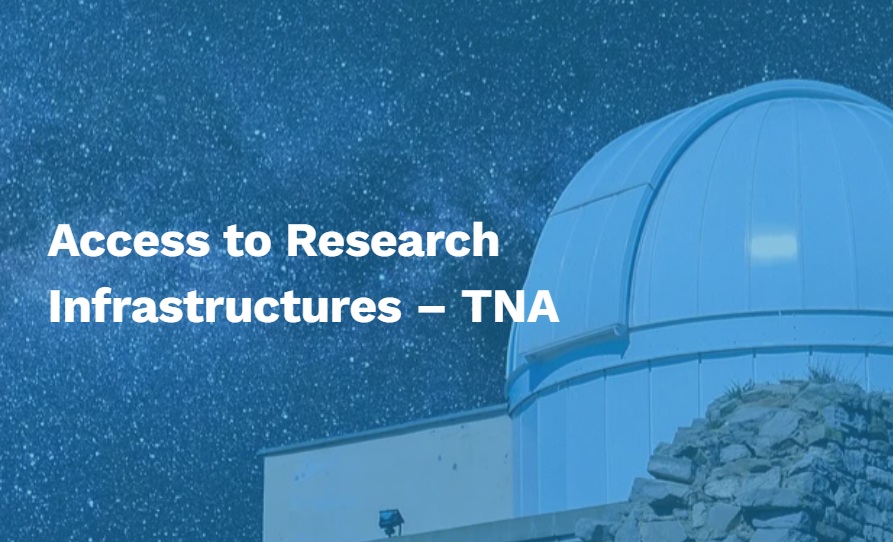 Research infrastructures funded under Horizon Europe are required to provide access to their services free of charge. Many infrastructures also offer travel grants, reimbursement of accommodation expenses, or small subsistence allowances to support researchers during their visits.
These research infrastructures span a wide range of scientific disciplines, from life sciences and social sciences to engineering, materials science, environmental research, and digital technologies. Access may be provided through:
- Virtual services, such as databases, digital platforms, computing resources, and data repositories;
- Remote access to instruments and facilities;
- On-site access, allowing researchers to visit laboratories and use specialised equipment, facilities, and services in person.
Researchers are encouraged to explore available opportunities through the Access to Research Infrastructures (Transnational Access, TNA) portal: Access to Research Infrastructures (TNA) – RICH Europe
Links to International Research Infrastructure Resources

Contacts in Estonian Research Council