THE MOBILITY SUPPORT CALL IS OPEN! The application deadlines in the Estonian Research Information System for 2026 are as follows:
– 22.05.2026
– 25.09.2026
– 18.12.2026
In 2026, the calls are organised on the basis of the Regulation of the Minister of Education and Research – “Conditions and Procedure for Granting Mobility Support” (link to Riigi Teataja. At the moment in Estonian only).
| Evaluation guidelines | Application form template | |
|---|---|---|
| Mobility Support (KOHTO) | KOHTO evaluation | KOHTO template |
Purpose of the grant
The purpose of the grant is to recruit researchers from abroad to Estonian research and development institutions. This aims to bring new knowledge to Estonian research, thereby enhancing the R&D activities carried out in Estonia and improving their quality. The Mobility Support allows both foreign researchers and Estonian researchers who have worked abroad (including postdoctoral researchers) to continue their scientific careers in Estonia, facilitating the integration of Estonia’s R&D system.
Who is the support intended for?
The support is intended for Estonian R&D institutions that have received positive evaluation (host institution) to employ a researcher arriving in Estonia. The support can be applied for a researcher who:
- Has not permanently resided or worked in Estonia during the last 12 months. This condition does not apply to recipients of postdoctoral grants (PUTJD) issued by the Estonian Research Council (ETAG);
- Has gained additional research experience after receiving a doctorate (e.g., as a postdoc, in an R&D institution, or in a research-intensive company).
Upon receiving the grant, the host institution is obligated to enter into an employment contract with the researcher for a minimum period of 24 months.
How does the application process work?
Applications are submitted according to the specified deadlines. The host institution must first send an expression of interest to ETAG by email at etag@etag.ee to apply for the support. Subsequently, a personalized application form will be created for the researcher in the Estonian Research Information System (ETIS).
The application must include:
- The researcher’s name
- Host institution
- Field of research and development
- Researcher’s CV with explanations indicating their research and development activities over the past five years, including their work and place of residence in the preceding 12 months
- Project description with activities and timetable to be carried out during the grant period at the host institution, indicating research and development activities planned in Estonia
- Description from the host institution of collaboration with the recruited researcher, how the researcher will be integrated into the institution, how the researcher’s work relates to the strategic objectives of the host institution, etc.
- Confirmation from the host institution that an employment contract will be signed with the researcher for an indefinite term or for a minimum period of 24 months, clearly specifying the position the researcher will hold.
How much funding is available?
The Mobility Support amount is €76,000 per year, of which ETAG covers 50%, and the host institution contributes 50%. The support period is 24 months. The funding includes the researcher’s salary fund, research costs, and general costs for the host institution.
How are applications evaluated?
ETAG organizes the evaluation of applications. Applications are accepted year-round witht the above mentioned deadlines. Applications received by the deadline are reviewed immediately after, with an expected evaluation and processing within estimated of 1-2 months. Independent experts in the field evaluate the applications. Each application is reviewed by at least two independent experts based on the following criteria:
- Scientific justification, feasibility of the project and scientific excellence.
- Researcher’s competence and potential, including their activities over the past five years.
- Host institution’s idea of integrating the researcher into the institution.
Each criterion is scored on a scale of 1-5. Funding decisions are made based on rankings until the allocated funds are exhausted. Applications scoring at least 80% of the maximum score (i.e., 12 points) qualify for funding, ranked until funds run out. If funds are depleted mid-year, subsequent application rounds will not be announced.
Frequently Asked Questions
- The project size and support amount have been increased to €76,000 per year.
- The requirement for research experience after earning a doctoral degree has been modified. It is no longer necessary to have completed a postdoctoral fellowship or conducted research at a comparable level by the time of application. However, having research experience after obtaining a doctoral degree remains important.
- The restriction on applying for Mobility Suppert for researchers also applying for other ETAG research grants (PSG, PRG, PUTJD) in the same year has been removed.
Permanent residence in Estonia is defined as staying in the country for at least 183 days in the last 12 months. If a person has stayed in Estonia for less than 183 days in the past 12 months and has not held an employment relationship with any Estonian institution, the host institution may apply for adaptation support for the researcher.
The researcher must not have held any employment contract with an employer registered in Estonia in the last 12 months, regardless of the actual location of work. For example, a researcher working for an Estonian institution but based abroad would still not qualify for the support. However, working under a service agreement does not disqualify the application.
No, these conditions do not apply to PUTJD recipients. However, this exemption only applies during the grant period. If a researcher has permanently resided or worked in Estonia after the end of their postdoctoral grant, they no longer qualify for the support.
The Mobility Support is primarily intended for researchers who have gained additional research experience after completing their doctorate. This can include a postdoctoral period, working as a researcher in an R&D institution, or a research-intensive company, etc. The duration of this experience is not defined, but it is crucial that the researcher has gained additional research experience post-doctorate. This experience is also an evaluative aspect (see the evaluation guide for details).
The host institution must include in the ETIS application a well-thought-out rationale for why they want to recruit the researcher, the added value he/she brings, and how the researcher aligns with the institution’s strategic goals. This rationale is a separate evaluative aspect and must be clearly presented and well-justified (see the evaluation guide for more details).
When publishing project results, the funding source must be mentioned (suggested wording: “This work was supported by the Estonian Research Council grant (KOHTO number)”). Publications lacking a reference to the allocated grant cannot be included in the final report. References should also be included in presentation slides, for example.
Beneficiaries of the support and previous guidelines
- Conditions and procedure and evaluation guidelines until 31.12.2025
- Conditions and procedure and evaluation guidelines until 31.12.2024
- Conditions and procedure and evaluation guidelines until 30.08.2024
| Principal investigator | Title of the project | Host institution |
| Daria Podmetina | Aiming for Responsible innovation and Sustainability: looking for new insights from open innovation, circular design, and design thinking with focus on Estonia | Tallinn University of Technology |
| Shomaila Sikandar | Elevation of TFTAK’s scientific excellence in filamentous fungi cultivation | TFTAK |
| Jan Harima | Building a Resilient Entrepreneurial Ecsoysem: Unpacking Resource Recycling Mechanisms | Tallinn University of Technology |
| Xia Hao | Discovery of biomarkers and mechanisms of chemotherapy-induced ovarian damage and fertility preservation | Celvia AS |
| Marek Mooste | Fabrication and application research of nanocarbon materials doped with transition metals and heteroatoms for fuel cell and Zn-air battery electrodes | University of Tartu |
| Martin Kolnes | Neurobiological mechanisms in cognitive regulation: A tVNS Approach | University of Tartu |
| Martina Aubrechtová | The dynamics of cephalopod assemblages during a period of climate change: a case study of the early Late Ordovician of Baltica | University of Tartu |
| Kristjan Kalam | Atomic Layer Deposited Novel Thin Films for Microbolometers and Light Sensors | University of Tartu |
| Keiu Telve | Transnational Civic Connections: Exploring Digital Social Inclusion and Lived Citizenship among Estonians abroad | University of Tartu |
| Ülo Väli | The impact of human activity and climate change on biodiversity: from assessing the effectiveness of indicator species to protecting endangered species | Estonian University of Life Sciences |
| Slavko Rakic | Hybrid Intelligent Assessment System for Inclusive and Ethical GenAI Use in Higher Education | Tallinn University of Technology |
| Teet Kuutma | Search for Milky Way analogues in the data of the J-PAS observational project | University of Tartu |
| Andres Reiljan | Maintaining democratic resilience and social cohesion in an era of affective polarization: A panel study of the Estonian population | University of Tartu |
| Andre Ostrak | Preduals and approximation properties of Lipschitz-free spaces | University of Tartu |
| Mikk Vikerpuu | Effective methods for the numerical solution of constant or variable order fractional differential equations | University of Tartu |
| Gabriele Perna | Probing the early Universe with Scalar-Induced Gravitational Waves | National Institute of Chemical Physics and Biophysics |
| Indrek Teino | The Regulation and Role of mRNA N6-methyladenosine in Neurons | University of Tartu |
| Priit Karis | Milk extracellular vesicles as biomarkers of common diseases in dairy cows | Estonian University of Life Sciences |
| Ajai Kumar Pathak | Genealogy-Wide Association Analysis in the Estonian Biobank: Leveraging Ancestral Recombination Graphs for Rare and Ultra-Rare Variant Discovery | University of Tartu |
Contact
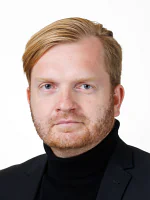
Allan Padar
Head of the Unit of Researcher Mobility, Manager of the Mobilitas 3.0 Programme
